A recent Australian Bureau of Statistics (ABS) survey found that 46.9% of businesses surveyed used some kind of restraint clause, including for workers in non-executive roles. The survey also found 20.8% of businesses use non-compete clauses for at least some of their staff and 68.2% for more than three-quarters of their employees.
Over the last 30 years, Australia has seen a decline in job mobility. Australia is not alone in this and other advanced economies have
experienced the same issue. While restraint clauses are not the only factor contributing to the decline – an ageing population and a rise in
post-pandemic market concentration in some industries has also contributed, it is specifically the role of restraints that is the focus of
the Competition Review issues paper (submissions close 31 May 2024).
From an economic perspective, declining job mobility impacts wage growth and innovation as restraints prevent access to skilled workers
within the economy. Productivity is a key concern as Australia’s productivity has declined in the last 20 years.
The review states that, “The direct consequence of a non-compete clause is that it hinders competition among businesses: it disincentivises
workers from leaving their current job, creating a barrier to the entry of new businesses and the expansion of existing businesses.”
For business however, this is the point - restricting the knowledge developed by a worker during their employment from benefiting a
competitor, limiting the likelihood of a ‘mass exodus’ of key workers from the business to a competitor, preventing clients from employing
key workers, and protecting the value of the business by preventing employees from walking away with customers that were hard won, at a
cost, by the business.
However, the impact of restraints appears to be a psychological deterrent given that most are not contested. Of the 115 matters relating to
restraints of trade between 2020 and 2023 dealt with by Legal Aid NSW, only one business commenced proceedings in court against a former
worker. And, a further study indicates that where employers seek legal redress in the courts, they are more likely than not to fail.
The international trend is to either ban restraints for workers under a certain income level and time limit restraints for higher paid
workers, or to limit the duration of restraints generally but specify a level of compensation to the worker for the restraint period.
| Non-compete clauses | prevent workers from joining a competitor or starting a new business in competition with their current employer for a period of time. |
| Non-solicitation clauses | prevent workers from soliciting former customers and co-workers. |
| Non-disclosure clauses | prevent workers from disclosing confidential information relating to their employment. |
We'd love to help you experience life with greater choice.
Arrive on Time is a National Network of repair. Arrive of Time moved to Xero with the assistance of the team at SMART Business Solutions. Providing the owners with real-time business information to make informed decisions and being able to monitor their business on a daily basis, even while out sailing!
With the Government’s announcement of the New Start-up investment tax incentives introduced to Parliament this
Don’t be left up in the air by traditional IT solutions. Check out our top 10 advantages for small businesses switching to cloud computing.
Success is about planning. We want to help you achieve success.
Our Business Development offerings are practical and tangible services that help to create long term value. Business Planning is a great starting point.
The team are pleased to announce Smart Business Solutions - Financial Planning has been announced as a finalist in the Financial Advice Innovator of the Year in the 2017 FINTECH Business Awards
Why you need to get an accountant in 2017. An accountant or bookkeeper will free you up to focus on your core business.
If you discovered a business owner was operating without a set budget, you’d probably think he/she was incompetent or not taking his/her financial obligations seriously. Still, many households don’t have a budget in place.
The Mornington Peninsula Brewery moved to Xero and Dear Inventory with the assistance of the team at SMART Business Solutions. The updated solution provides brewery management with real-time business information to make informed decisions down to costing of beer per litre, can, bottle or keg.
What's happening in the Xero space? Here is what we uncovered during Xerocon San Francisco.
Have you noticed that your Xero has gone offline for an hour or two in the last couple of weeks? This is because Xero is moving to a new platform, one that will allow them to develop further the technology that they include within their software.
The past financial year has seen a marked increase in the number of Tax Audits with the Australian Taxation Office’s (ATO) notable inspection of business transactions across the board.
You might view Twitter and Facebook as frivolous time-wasters that have no place in the business arena. Five years ago I was my told by a friend, “your business needs a Facebook page”.
As you may already be aware, from the first pay period commencing on or after 1 July 2016, the national minimum wage will increase to $672.60 per week, or $17.70 per hour.
Thinking about renting out your personal or holiday using Airbnb or a holiday agent?
In May 2015, the ATO released official guidelines informing Airbnb hosts of their obligations to disclose any money they make from using the service.
The team at SMART have summarised our take on the budget and how it will impact locals on the Mornington Peninsula.
Victorian Treasurer Tim Pallas handed down the Andrews Government’s second Budget yesterday and while it doesn’t always get the same amount of media attention as the Federal budget, there are certainly some items that small & medium business and high net worth individuals need to be aware of.
Time is ticking with not much time left until SuperStream becomes mandatory, employers are being urged to cross SuperStream off their ‘to-do’ list ahead of the 30 June 2016 deadline.
The ATO has issued a timely reminder before the end of the financial year on the changes announced in last year's Budget.
Listen up! The word on the street is that big changes to superannuation might be introduced on budget night May 3rd. If made they will come into effect as soon as the announcement is made, leaving no time to react to the changes. We’ve got the low down on what’s expected and how it might impact you.
What if you can’t be there? Have you got someone capable of running your business? Do they have the shoes to fit ?
Most people will quite literally earn millions of dollars in their lifetime. Yet many people struggle financially and live from one pay period to the next.
A Trap That Causes Many Businesses To Go Broke, While They’re Making a Profit
There’s a saying in business, “You can go broke making a profit.” And another, “Cash is king. Profit is theory.”
Treat finding an accountant like speed dating. Life is busy, you need your accounts looked after and you don’t have time to wade through all the possible suitors. You know what you’re looking for – someone who is on the same page as you, who’s going to hit the deck running and who’s going to make your life easier with them in it.
Following many requests from clients SMART Business Solutions has now started a dedicated bookkeeping division offering you the opportunity to spend more time on your business and less time with the nitty gritty of bookkeeping
SMART Business Solutions are proud to have been awarded several significant awards recently.
We are extremely proud to announce that Shannon Smit, has been appointed to the Board of Taxation’s Advisory Panel for 2016.
Don’t be left up in the air by traditional IT solutions. Check out our top 10 advantages for small businesses switching to cloud computing.Cloud computing is fast becoming the norm because storing information and using software hosted on the Internet has many advantages.
We are frequently asked questions about obligations for WorkCover and Payroll tax. In this article we explore the details, cutting through the legal jargon so you can gain a greater understanding of how it effects you and your business.
New Year’s Eve is famous for the New Year’s Resolutions people make to better themselves in the coming year. What about your financial future? How can you ensure you stick to your resolution?
Small business owners have a lot to think about: sales, staffing, customer service, vision, growth, the list goes on. In fact, it is hard not to think about your business when you’re a small business owner. Perhaps the one responsibility you would rather not think about is bookkeeping/accounting?
Some business owners try to avoid the hassles of accounting by simply ignoring the problem. “I’m too busy,” they say, but no business can hide from accounting. If late lodgement penalties aren’t motivating enough, hopefully the knowledge that you have basically no visibility into the vital indicators of business health will be.
Sure, there are online tools out there to make the process less burdensome, but could your time be better spent? And while you might think that a part-time bookkeeper might solve your problem, it really depends on your needs, and there are downsides there too.
HERE ARE what we think are THE TOP 5 REASONS TO OUTSOURCE YOUR bookkeeping to SMART Bookkeeping Solutions in Mornington
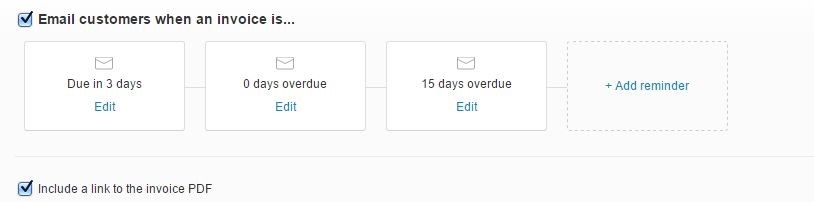
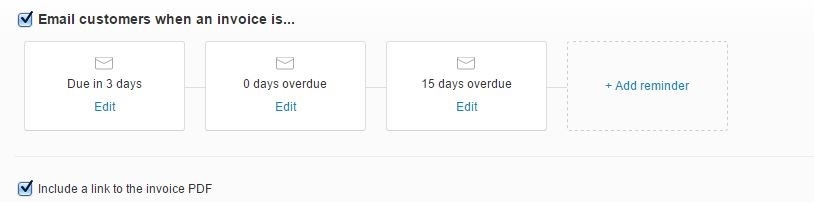
We often hear from clients “I often forget to send invoice reminders or statements and invoices are falling through the cracks, can Xero help with this?” Easy, of course it can!
It's time to celebrate! SMART Business Solutions are pleased to share with our clients some exciting news. The Finalists in the Australian Accounting Awards have been announced with the team being successful finalists in the following categories
- Best Marketing (you know we always try to be different!) Shannon was also interviewed http://www.accountantsdaily.com.au/breaking-news/8605-accountants-must-touch-their-clients-12-times-a-year
- Accounting Student - Well done Hayden!
- Office Administrator - Awesome effort Nicole!
- Partner of the Year - Shannon Smit for both Transfer Pricing Solutions & SMART Business Solutions
Quality Matters – Independent review with outstanding results for SMART Business Solutions
Paying an accountant to handle all of your financial reporting can be expensive, but if you have several different sources and deductions or if you own a small business, it can be worth it.
Is your business thriving, but you struggle to maintain positive cash flow?
Don’t let it crumble from underneath you
It’s nearly BAS time again - tips to make BAS processing easier
BAS time seems to come around quicker and quicker! Here are some tips to try and make it a little easier!
With June 30 quickly approaching we are pleased to provide our year end checklists and questionnaires to help you get organised.
Falling behind on your BAS lodgements looks like an administrative problem. Left long enough, it becomes an expensive one, because the GST you collected stays payable indefinitely while the GST credits you are owed disappear after four years. Here is what that looks like in dollars.
With negative gearing now quarantined for established dwellings, new house and land has become the sensible play for investors — but there is a trap in the first eighteen months. Interest on the land is denied, while interest on the construction is not. If the bank has written one loan, someone has to do the sums. Here is why it pays to split the loan before you sign.
When the draft legislation for the trust minimum tax was released, it came with a reassurance: if you do not want to restructure, you can simply make an election instead — no restructure, and no state stamp duty. That is accurate, but it is also a very small part of the decision. Here is why you should choose your structure for the eventual sale of your business, not for the announcement.



















.jpg)
.jpg)





.jpg)
.jpg)
.jpg)