Climate change featured heavily during the election and now the Albanese Government is putting into place some of the promises it made. We look at the current state of play and the likely impact.
The Government’s Climate Change Bill passed the House of Representatives in early August and is now before the
Senate Environment and Communications Legislation Committee for review. But what impact does the legislation have on business and
consumers in Australia?
Under the Paris
Agreement,
a legally binding international treaty, Australia and 192 other parties committed to substantially reduce global greenhouse gas
emissions to limit the global temperature increase in this century to 2 degrees Celsius while pursuing efforts to limit the increase
even further to 1.5 degrees. At this level, the more extreme impacts of climate change - floods, heatwaves, rising sea levels, threats
to food production - can be arrested. As part of this commitment, the parties are required to communicate their emissions reduction
ambitions through a Nationally Determined Contribution (NDC). On 16 June 2022, Australia communicated its updated NDC to the UN,
confirming Australia’s commitment to achieve net zero emissions by 2050, and a new, increased target of 43% below 2005 levels by 2030 (a
15% increase on the previous target). The Climate Change Bill enshrines these emission targets into legislation.
The Bill itself sets an accountability framework for climate targets but does not introduce mechanisms to cut emissions.
Impacted industries
The energy sector is at the heart of climate change producing around three-quarters of global greenhouse gas emissions. In Australia, the CSIRO says energy contributes approximately 33.6% of all emissions, with a further 20.54% from stationary energy (from manufacturing, mining, residential and commercial fuel use), transport 17.6%, and agriculture 14.6%. The future of the energy industry is also at the crux of the Government Powering Australia policy.
When an accountant talks about Tax Planning what do they actually mean? As part of our tax advisory service we always offer strategic tax advisory, but it's important to note there are a lot of things that accountants cannot implement after June 30.
Small brewers and distillers will benefit from $255 million in tax relief to support more jobs and investment as part of the 2021-22 Budget.
The rollout of Covid vaccines remained the key focus worldwide. More than 30% of adults in the US have now received at least one jab, for example, and new infections are down by around 80% since the peak in January.
Here’s a guide to the strategies you can use to minimise your business tax.
Changes from 1 July 2021 will impact on how much money you can contribute to superannuation and how much you can have in your retirement phase superannuation account.
Builders, electricians, plumbers, architects, real estate agents, security guards and other workers who hold an occupational licence in their home state or territory will soon be automatically deemed to have the necessary licence in other states.
What’s the magic amount you need in your super account to retire comfortably?
Rhino 4x4 directors had been previously working with another accountant using MYOB, but they just didn’t have the commercial knowledge that they needed nor the visibility into the numbers. Enter Shannon Smit and the team from Smart Business Solutions to take Rhino 4x4 to the next level.
Having an Estate Briefing Paper prepared by strategic tax advisors means that we can guide the structure of your Estate Plan to ensure your assets will be managed and transferred to your beneficiaries in the most financially efficient and tax effective way.
Australian inflation recorded at 0.9% in the 2020 calendar year, nearly double what the Reserve Bank of Australia forecasted in November’s Statement on Monetary Policy.
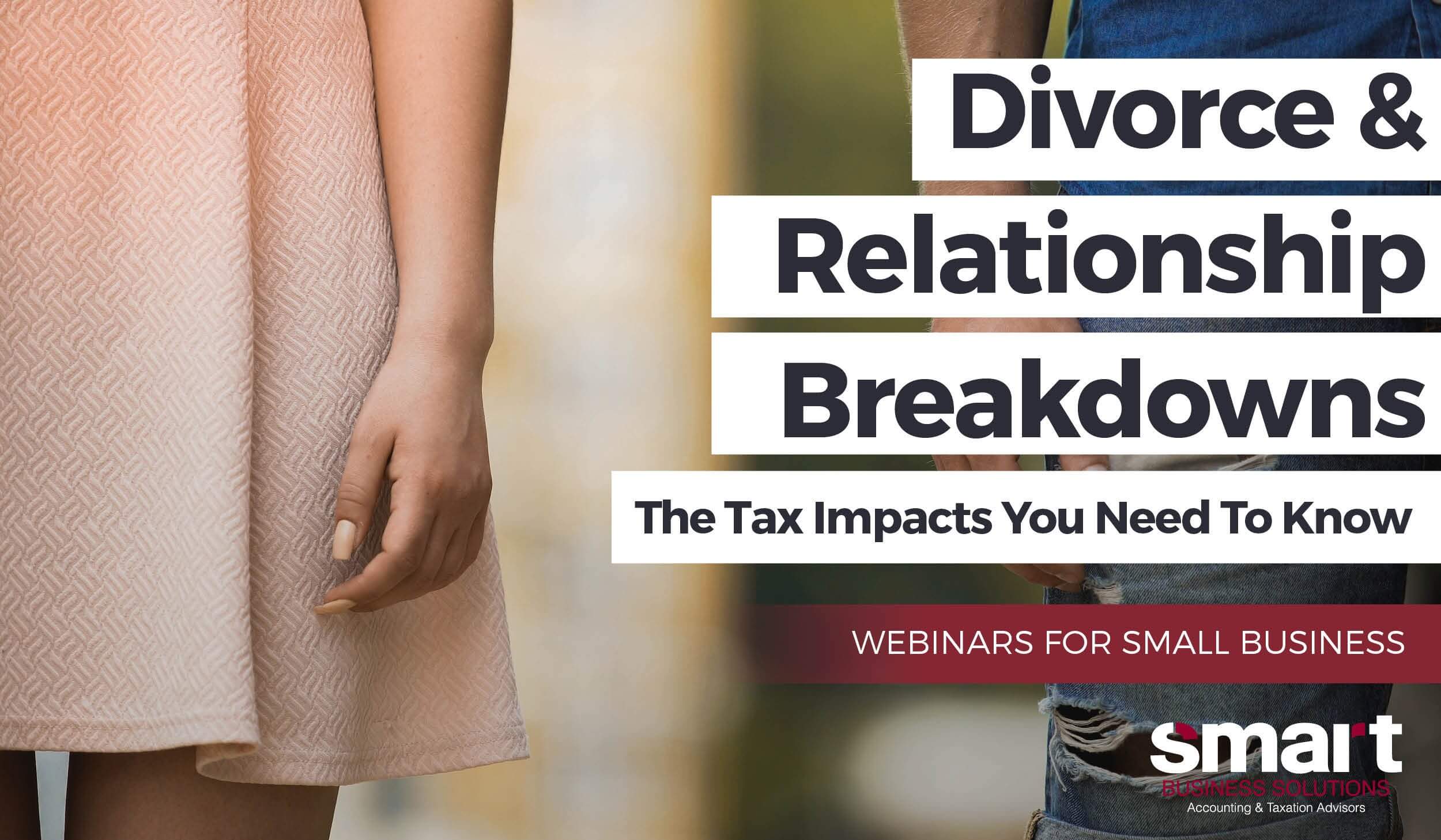
The tax impacts you need to know with divorce and relationship breakdowns including some of the areas that may impact you and where you may need assistance for your SMSF, Trusts and Estate Planning.
In the 2020-21 Federal Budget, the Government announced the introduction of a new JobMaker Hiring Credit to stimulate job
creation. This webinar helps you understand your eligibility for JobMaker credits so you can take appropriate steps to avoid missing
out on payments from the ATO.
With the borders between the State and Territories all but open and 2021 in sight, there is a hunger for a return to normal. With Australia's desire to ‘get on with things,' sentiment reached its highest level since November 2013 and Christmas spending is expected to be consistent with previous years.
As the holiday season winds up, it’s easy to be distracted from your financial goals. But this is actually the perfect time to put a few simple plans in place for a positive start to the new year.
The US election had earlier dominated attention. Donald Trump’s reluctance to concede diverted attention from possible policy changes under
the new Biden administration, but this will likely become an increasing focus for investors in the months ahead.
Stimulating investment is high on the Government’s agenda. To encourage spending, the 2021-22 Budget introduced a measure that allows businesses to immediately deduct the cost of new depreciable assets and the cost of improvements to existing assets in the first year of use.
We’ve had quite a few questions about the JobMaker hiring credit announced in the 2020-21 Federal Budget. The legislation enabling the JobMaker scheme has not passed Parliament as yet and until this occurs, the JobMaker rules are not certain and may change.
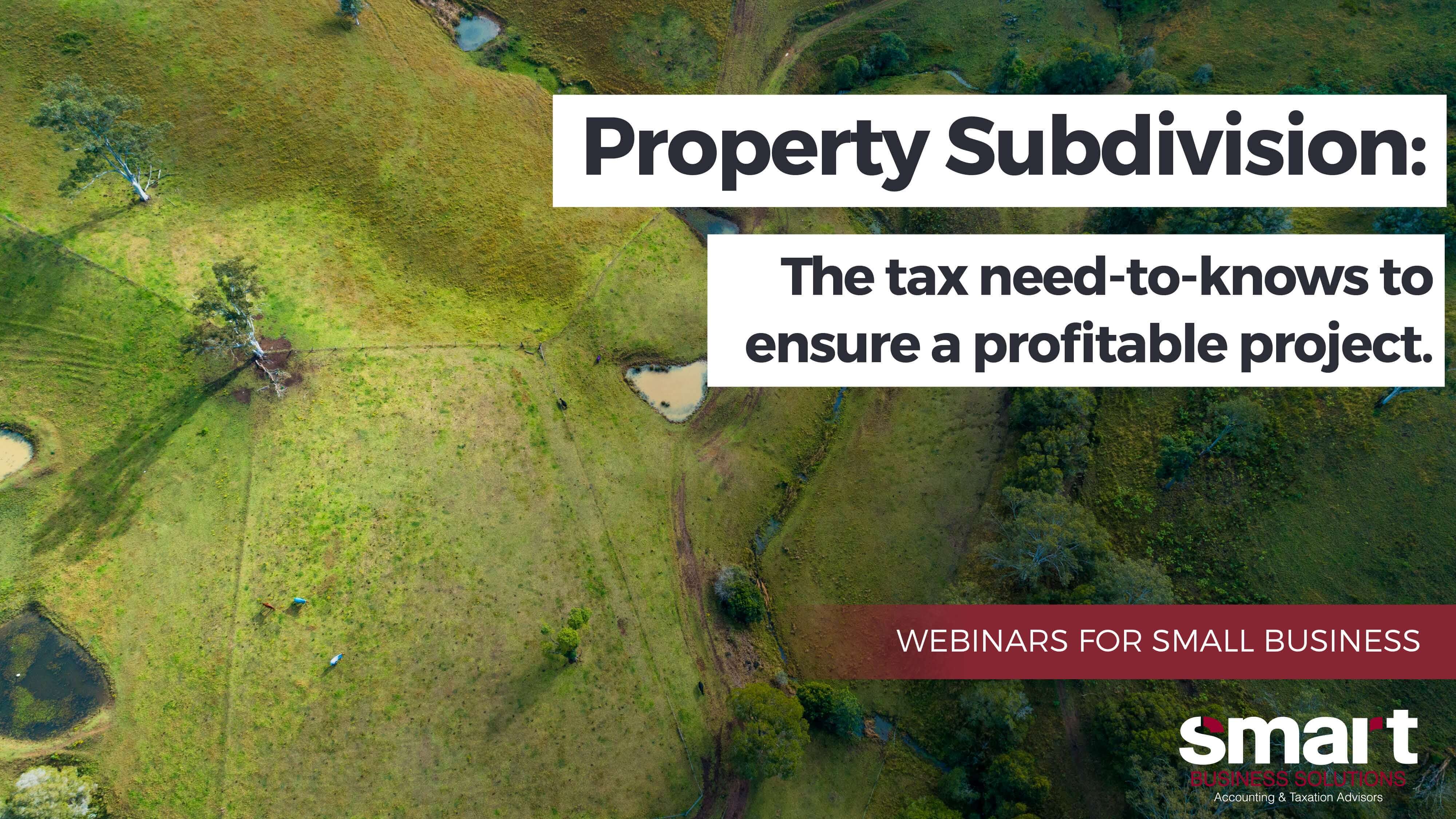
You've got a big block with big plans to subdivide in order to make big bucks. But do you know the ins-and-outs of property development from a TAX perspective? Before you jump in and commit to anything, it is important to understand the tax liabilities that might arise from your projects that will affect your overall profitability.
The idea of insuring against loss of income is one that has clear value. The idea of insuring against loss of income is one that has clear value. Yet many neglect to insure their most valuable asset. Income protection could be the answer – so how does it work?
Prossor Town Planning is dedicated to help people obtain planning permits across industrial, commercial residential and green wedge developments. Jackie Prossor tells us why engaging Shannon Smit as her business accountant, in addition to being her financial planner and business coach, makes perfect sense.
Director and owner Jon Robbins first engaged SMART Business Solutions as their accountant in 2014. Jon was looking for a proactive accountant and business advisor who would listen to him, take the time to understand his business, and work together collaboratively.
The 2020-21 Federal Budget is a road to recovery paved with cash. Some of the measures are aimed at addressing the harsh lessons COVID-19
has taught us and seek to centralise production back in Australia to ensure our industries can be self-reliant.
Reflecting on the past 6 months, particularly since the effect of Coronavirus on financial markets, I am concerned that many investors do not have a clear and tailored investment strategy. My observations are that investors seem to be failing to understand one basic investment principle; 'The higher the return the higher the risk’.
Your lender has asked for an accountant’s letter, but there are some things we cannot certify. Here is why these requests can create problems, what your accountant can confirm and how we can still help keep your application moving.
Taking money from your company as a Division 7A loan can defer tax today, but the repayments and interest can create pressure later. Here is why it pays to understand the longer-term impact before you draw the funds.